
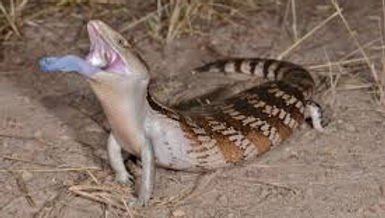
Northern Blue-tongued Skink
Tiliqua scincoides intermedia
Australia's Threatened Species Category
Critically Endangered
Listed since: 21/12/2023
IUCN's Threatened Species Category
Least Concern
Listed since: 20/02/2017
Population trend: Stable
Other names: None
Priority species? No
The Australian government's Threatened Species Action Plan 2022-2032 selected over 100 priority species derived from consultation with threatened species experts and the wider community. While all species are important, focusing on a limited number of species can help target effort and resources so that outcomes can be achieved, measured and shared.
Description
The Northern Blue-tongue Skink occurs across northern Australia from Eighty Mile Beach in Western Australia, across the southern Kimberley and Top End of the Northern Territory to around the Cloncurry area in western Queensland. They can be active at any time of the day or night when temperatures are suitable, but they are most often encountered during the day. It occurs in a wide variety of ecosystems and has been recorded sheltering under shrubs and thick grasses, in leaf litter, within burrows, and under built structures and discarded household items.
Threats
The greatest threat to the long-term persistence of the northern blue-tongue skink is the invasive and toxic cane toad.
Quollity Conservation Hub's Overall Priority Score
Average life span:
Unknown
Number of young produced each year:
Unknown
Number of breeding events each year:
Unknown
Minimum sexual maturity age:
Unknown
Who is helping
Useful links for more detailed information on this species
DCCEEW - Australian Government Department of Climate Change, Energy, the Environment and Water
SPRAT - DCCEEW Species Profile and Threats Database