
Australian Lungfish
Fish
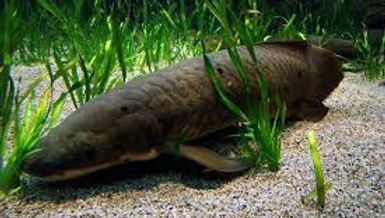
Neoceratodus forsteri
Australian Lungfish
Neoceratodus forsteri

Australia's Threatened Species Category
Vulnerable
IUCN's Threatened Species Category
Endangered
Listed since:
Listed since:
Description
Description
The Australian government's Threatened Species Action Plan 2022-2032 selected over 100 priority species derive from consultation with threatened species experts and the wider community. While all species are important, focusing on a limited number of species can help target effort and resources so that outcomes can be achieved, measured and shared.
Description
The Australian Lungfish is considered one of, if not, the oldest known extant vetebrate species with fossils found in Australia dated by to at least 100 million years ago. It is known only to occur in a few river systems in south-eastern Queensland, naturally occurring in the Burnett and Mary river systems. They are not reliant on breathing air and predominatly uses its gills for respiration only breathing air via its lungs when activity is increased or when the water quality is poor.
Threats
A main identified threat to the Australian Lungfish is the loss of habitat and barriers to movement caused by the construction of man-made dams and weirs along waterways, together with the loss and fragmentation of vegetation along banks, including roots that provide shelter and habitat.
Quollity Conservation Hub's Vulnerability Score:
42
To help compare the relative vulnerability of different species, we have developed a scoring system based on biological and ecological characteristics that influence a species' ability to survive and recover from environmental change and natural disasters.
The framework is adapted from assessment methods used by conservation experts following the Black Summer bushfires to help identify species most in need of conservation action, research, and recovery funding.
Each species is assessed using a range of factors, including its conservation status, lifespan, reproductive rate, habitat and dietary requirements, ability to disperse or recover after fire, and the number and severity of threats it faces.
In general, the higher a species' score, the greater its overall vulnerability and risk of decline or extinction.
Like all conservation assessments, this scoring system is limited by the information currently available. Many threatened species remain poorly studied and receive limited research funding, meaning some assessments rely on the best available scientific knowledge or information from closely related species. As new research becomes available, scores may be updated to reflect our improved understanding.
Average life span:
Number of young produced each year:
Number of breeding events each year:
Minmum sexual maturity age:
> 10 yrs
< 100
One
> 5yrs
Who is helping
DCCEEW - Australian Government Department of Climate Change, Energy, the Environment and Water
SPRAT - DCCEEW Species Profile and Threats Database